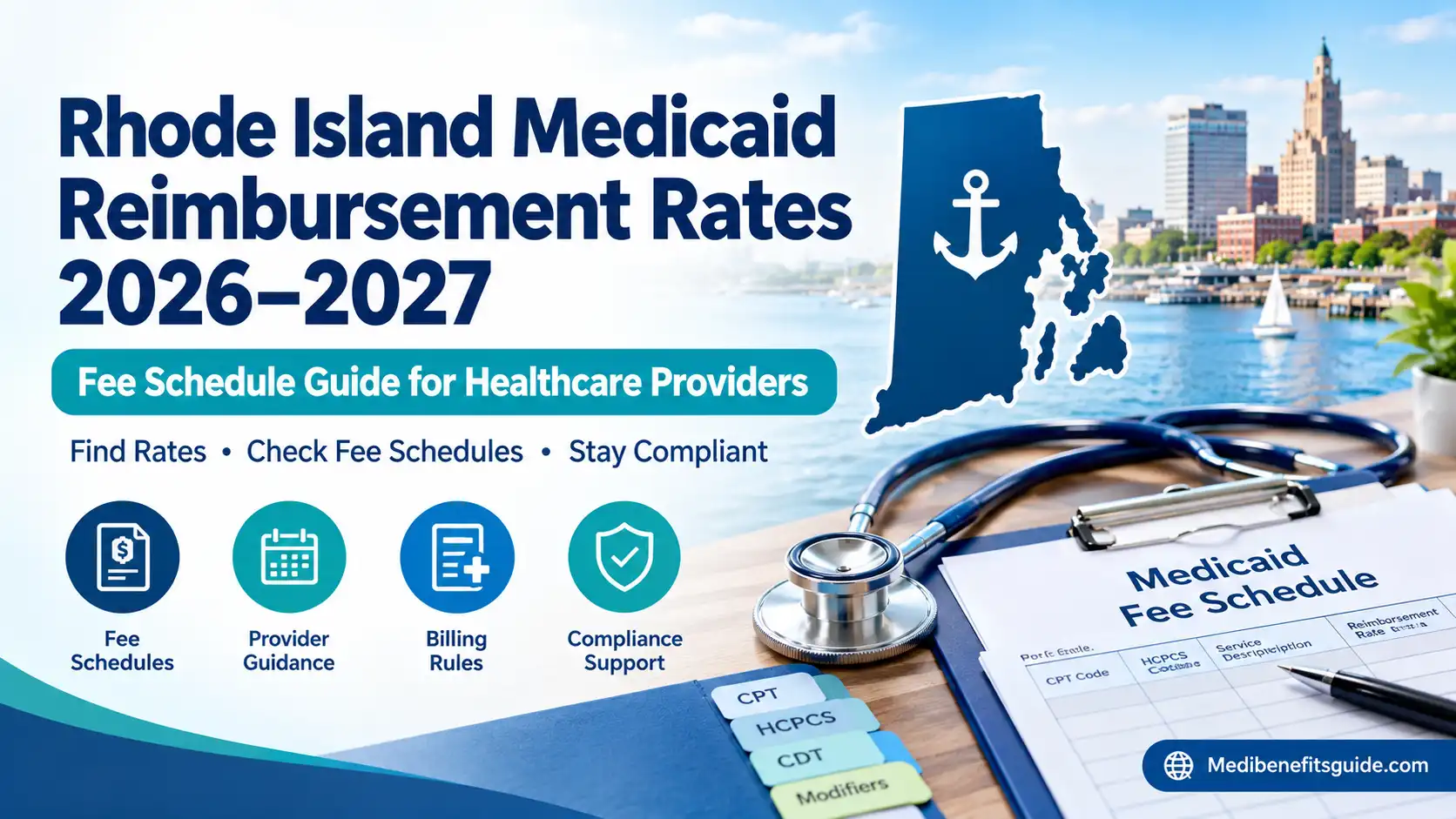
Rhode Island Medicaid reimbursement rates are basically just how much money providers get paid for covered services they give to eligible members. BUT it’s not one single number, lol. What you get paid depends on the service, the procedure code, your provider type, the payment method, and the billing rules stuck to the claim.
Best place to start? The Rhode Island Executive Office of Health and Human Services (EOHHS). They put out the fee schedule resources, provider manuals, claims guidance, and billing requirements you need. And if you’re wondering how Rhode Island stacks up against other states, the Medicaid reimbursement rates by state page is honestly a pretty good extra to check out.
For the 2026-2027 plan year – Read this about the announced rate changes super carefully. The increase begins to apply October 1, 2026, but is not operational until all the federal clearances, contracts and configurations have been made.
Where to Find Rhode Island Medicaid Reimbursement Rates
The official EOHHS website is your main spot for Rhode Island Medicaid fee schedules and billing info. There are four big resources that do most of the work:
- Billing and Claims: Rhode Island Medicaid fee schedules, claims guidance, and other billing stuff.
- Medicaid Provider Manual: The rules for each service, coding requirements, and billing instructions for providers.
- FY2027 Medicaid Budget Initiatives: Info on announced Medicaid rate changes and when they’re supposed to start.
- Provider Enrollment: Help with the enrollment requirements for healthcare providers.
Mix them all together and you can find the right rate, check billing policy, see enrollment requirements, and answer most claims questions. Oh, and patient eligibility is a totally different thing! The Rhode Island Medicaid income limits page explains who actually qualifies in the first place.
How to Look Up Rhode Island Medicaid Fee Schedule Rates
Just follow these steps for any service you’re planning to bill.
- Identify the service: Figure out if it’s a physician visit, dental procedure, therapy session, medical supply, behavioral health service, or some other covered benefit.
- Find the correct procedure code: Look up the right CPT, HCPCS, CDT dental, or state-specific code.
- Check the official fee schedule: Find the schedule that matches your service and provider type.
- Verify the effective date: Make sure the rate actually works for the date of service.
- Review modifiers and units: Some codes need modifiers, certain units, or other billing details.
- Read the provider manual: Double-check coverage rules, documentation requirements, medical necessity, and prior authorization.
- Confirm the payment arrangement: Find out if the claim follows fee-for-service rules or a managed care plan’s rules.
Important: Just because a fee schedule lists a rate doesn’t mean you’re 100% getting paid that. The final reimbursement amount depends on coverage, coding, authorization, claim edits, and payment rules.
Rhode Island Medicaid Rates by Provider Type
Rates are different for different healthcare services, so just guessing is NOT gonna cut it. Check the official schedule and the provider manual for your exact service.
Provider or service type| What to verify
Physicians and outpatient services| Procedure codes, provider type, modifiers, and applicable fee schedule
Dental services| CDT codes, covered procedures, and dental billing requirements
Behavioral health| Service codes, provider qualifications, authorization, and documentation
Hospitals| Applicable institutional payment methods and billing rules
Physical, occupational, and speech therapy| Therapy codes, units, visit limits, and authorization
Durable medical equipment (DME)| HCPCS codes, documentation, medical necessity, and authorization
Pharmacy| Covered medications, pharmacy billing rules, and applicable reimbursement policies
Home health and community-based services| Service-specific rates, eligibility, authorization, and program requirements
The Rhode Island Medicaid Provider Manual splits up its guidance by provider category. Payment methods aren’t the same for everything, and some services come with extra program-specific rules. Because of course they do.
Rhode Island Medicaid Rate Changes for 2026–2027
So Rhode Island’s FY2027 Medicaid budget initiatives bump up rates for certain service categories, starting October 1, 2026. Nice, right?
But, an effective date doesn’t mean the new rate is already chilling in your billing system on day one. Federal approvals, managed care contract changes, fee schedule updates, or system changes can slow things down. EOHHS says if implementation gets delayed, it’s expected to be applied retroactively back to the effective date, so that’s kind of a relief.
Before you bill at a new rate, do this:
- Read the official FY2027 Medicaid budget initiatives.
- Check the current fee schedules and provider announcements.
- Confirm which services and provider categories are included.
- Verify the date of service.
- Contact the health plan if managed care rules apply.
- Keep a record of the official guidance behind every billing decision.
Also, not every service got an increase. And provider categories didn’t all go up by the same percentage, so don’t assume! Confirm the exact rate and whether it’s been implemented using official state resources. If you’re benchmarking, you can also compare it against the bigger Medicaid reimbursement rates by state data.
Fee-for-Service vs. Managed Care Reimbursement
Rhode Island Medicaid payments follow either fee-for-service (FFS) rules or a managed care setup. Once you know which one applies, you’ll know where to look for the right rate. Easy.
Feature| Fee-for-service (FFS)| Managed care
Main reference| Applicable state Medicaid fee schedule and program rules| Health plan contract, plan guidance, and applicable state requirements
Payment basis| The applicable payment methodology for the covered service| Contractual and program-specific payment arrangements
Billing guidance| State provider manuals and claims instructions| State requirements plus applicable plan instructions
What to confirm| Code, date of service, provider type, and billing rules| Network status, contract terms, authorization, and plan-specific billing requirements
Managed care organizations (MCOs) have provider contracts that change what you get paid. Plus, state minimum fee schedules or other requirements might apply to certain services too.
So check the member’s coverage and the service before you submit anything. That’s how you figure out if the claim goes through the state FFS system or a managed care plan.
Billing Rules, Prior Authorization, and Claim Processing
Getting the coding right is super duper important, but it’s only one piece of the puzzle. Coverage policies, documentation standards, authorization rules, and claim submission requirements all have to match up too.
CPT, HCPCS, and CDT Codes
CPT codes usually describe medical procedures and professional services. HCPCS codes cover other healthcare services, supplies, and equipment. CDT codes are for dental procedures.
Use the code that actually describes what you did, like for real. The provider manual tells you about modifiers, units, and other billing instructions.
Prior Authorization and Medical Necessity
Some services need prior authorization or extra documentation. If you can, confirm that BEFORE you deliver the service. Future you will be so thankful.
But authorization still isn’t a promise of payment. The service also has to meet eligibility, coverage, coding, documentation, and claim requirements.
Checking Claim Status
Use the right Rhode Island Medicaid claims resource or health plan portal to check status. The remittance advice or explanation of benefits (EOB) shows payment details, adjustments, and why something got denied.
If a claim gets denied or underpaid, go through it in this order:
- Look at the denial or adjustment code.
- Confirm member eligibility and coverage on the date of service.
- Check procedure codes, modifiers, units, and provider information.
- Verify authorization and documentation requirements.
- Review the applicable fee schedule and billing manual.
- Fix and resubmit the claim, or follow the right appeal process.
Save your claim submissions, messages, authorization decisions, and remittance advice. If a payment dispute pops up, or the same billing problem keeps happening, those records are exactly what you’ll need.
Provider Enrollment and Third-Party Liability
Ensure you fulfill all Rhode Island Medicaid enrollment criteria prior to billing. Then, once they are, consider coordination of benefits (COB) and third party liability (TPL), when applicable, for when the insurance is primary.
The Medicaid Management Information System (MMIS) helps with Medicaid administration and claims processing. Follow the official instructions for whichever system or health plan you’re dealing with. Not all claims take the same route, which is annoying but true.
Comparing Medicaid Rates With Medicare and Commercial Insurance
Providers often put Medicaid reimbursement next to Medicare or commercial rates when they’re checking practice finances or thinking about payment policies. But be careful with those comparisons, because methodologies, service definitions, geographic adjustments, provider classifications, and effective dates are all different.
The Rhode Island Office of the Health Insurance Commissioner (OHIC) has published rate-comparison research, including a Milliman report that looks at certain Medicaid fee-for-service rates compared to other payment benchmarks.
Reports like that give you helpful background, for sure. But they don’t replace the current fee schedule, and they don’t decide payment on any one claim. Compare similar services, and always check the methodology and effective dates.
Official Rhode Island Medicaid Resources
For accurate reimbursement info, go straight to these official resources:
- EOHHS Billing and Claims: Fee schedules, billing information, and claims guidance.
- Rhode Island Medicaid Provider Manual: Provider-specific policies, coding instructions, and service requirements.
- FY2027 Medicaid Budget Initiatives: Announced rate changes and implementation information.
- Rhode Island Medicaid Provider Enrollment: Enrollment requirements and provider participation guidance.
Pick the one that fits your service, provider type, payment arrangement, and date of service.
FAQs About Rhode Island Medicaid Reimbursement Rates
1. Where can I find the official Rhode Island Medicaid fee schedule?
Start with the Rhode Island EOHHS Billing and Claims section. It links to fee schedule resources and other billing info. After that, open the provider manual to see the rules for your specific service.
2. How do I check a Rhode Island Medicaid CPT or HCPCS reimbursement rate?
Identify the correct procedure code and verify it with the valid fee schedule. Verify provider type, modifiers, units, date of service, and look to provider manual for any additional billing instruction.
3. Are Rhode Island Medicaid rates changing in 2026–2027?
Yep, for some services! The FY2027 budget initiatives include rate increases that start October 1, 2026. But putting them into action can take longer, so check current schedules and official updates before you bill.
4. Are fee-for-service and managed care rates the same?
Nope, not always. FFS claims follow state payment rules, but managed care claims can be shaped by provider contracts and plan-specific requirements.
5. Where can I find Rhode Island Medicaid dental reimbursement rates?
Use the official EOHHS resources to find dental billing guidance and fee schedule info. Check the CDT code, coverage requirements, provider qualifications, and date of service.
6. Does prior authorization guarantee Medicaid payment?
Sadly no. Payment still depends on eligibility, coverage, correct coding, documentation, billing rules, and clean claim processing.
7. How can I check a Rhode Island Medicaid claim?
Use the state claims resource or the health plan portal. Look at the claim status and remittance advice, then follow the right billing instructions if the claim needs fixing or another review.
8. What should I do if Rhode Island Medicaid denies or underpays a claim?
First read the denial reason or the adjustment reason. Make sure you are eligible and that the coding is correct. Check the authorization and the documentation. Then fix the claim. Then handle the claim again by going through the reconsideration process or the appeal process.
9. Does the listed reimbursement rate guarantee the amount a provider will receive?
Absolutely not. The listed rate is just a reference under the payment rules. Modifiers, units, authorization, contractual arrangements, and claim edits can all change the final payment.
Conclusion
Fees are adjusted by code, program, system, the time period in which the code is billed, and the place of service. All fee schedules, provider manuals, billing rules, and 2026-2027 fee updates can be found on the EOHHS website.
Honestly, most denials come from stuff you could’ve checked before sending the claim. Confirm the code, the date of service, the authorization, and whether the member is in FFS or managed care. Spending five minutes on that can save you weeks of redoing everything later. Trust me on this one!
Official Resources
- Check Current Fee Schedules and Billing Rules — RI EOHHS
- Find Your Service’s Billing Rules — RI Medicaid Provider Manual
- See Which Rates Increase October 1 — RI EOHHS FY2027 Budget Initiatives
- Get Enrolled Before You Bill — RI Medicaid Provider Enrollment
Disclaimer: This article is intended for information purposes only, and is not an official Rhode Island Medicaid policy. Rates, coverage, and billing requirements are subject to change. Please verify billing requirements before billing from Rhode Island EOHHS or the plan.

About Naseer
Naseer has 10+ years of experience creating informative content and researching medicare topics. He focuses on simplifying Medicaid and benefits details to support readers find clear, reliable, and easy-to-understand guidance.