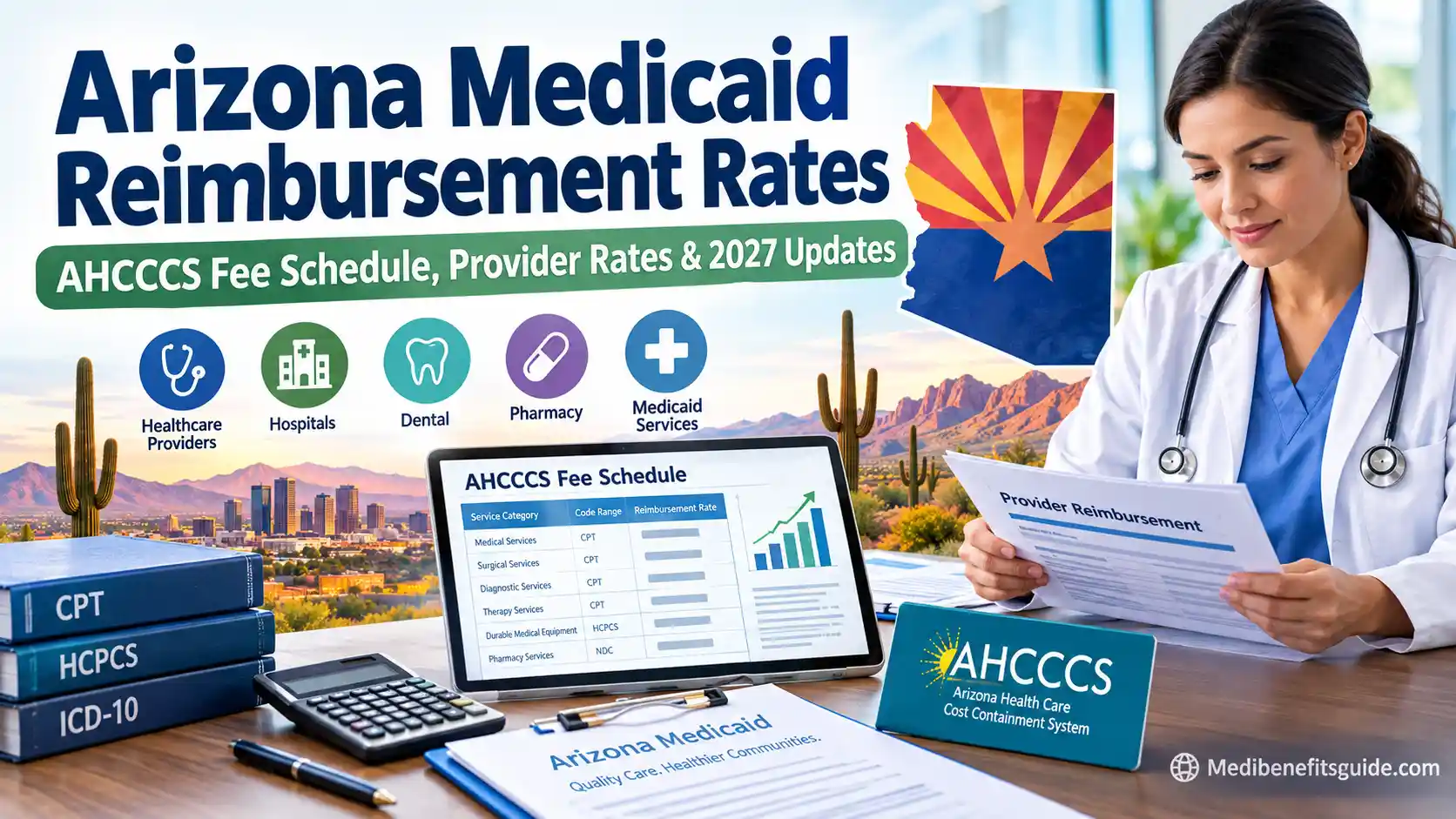
Arizona Medicaid reimbursement rates run through the Arizona Health Care Cost Containment System, better known as AHCCCS. There’s no single number that applies across the board. Rates shift depending on the service, the billing code, the provider type, the program, the effective date, the modifier, and where the service was delivered.
AHCCCS publishes separate fee schedules for physicians, dental services, behavioral health, DME, laboratory services, hospitals, HCBS, nursing facilities, transportation, and more. Anyone comparing these to Medicaid reimbursement rates by state will notice Arizona’s structure is fairly typical — multiple schedules, not one master list.
For providers, the real task is matching the current fee schedule to the actual date of service and service category. A listed rate isn’t a promise. AHCCCS paying a claim is a separate question entirely.
What Is the AHCCCS Fee Schedule?
The AHCCCS fee schedule isn’t one document — it’s a collection of reimbursement schedules that establish or communicate payment amounts for covered services under Arizona’s Medicaid programs.
Depending on what you’re billing, you’ll run into:
- CPT codes for professional medical services
- HCPCS codes for supplies, DME, and other services
- CDT codes for dental procedures
- Revenue codes for facility billing
- APR-DRG values for certain inpatient hospital reimbursement
- Per-diem or prospective payment methodologies
- “By Report” or BR reimbursement
AHCCCS keeps both current and historical schedules on file, so providers can pin down the right rate for the right date. Physician schedules, for example, update annually for dates of service starting October 1, with quarterly additions or adjustments layered in when needed.
Rate Does Not Equal Coverage or Patient Cost
Here’s the distinction that trips people up most:
Rate ≠ Coverage ≠ Authorization ≠ Claim Payment ≠ Patient Cost
AHCCCS is explicit about this: a code and a rate showing up on its website doesn’t mean the service is covered, and it doesn’t guarantee payment. Coverage depends on the member’s enrollment and the policies that apply to them.
For members, that published reimbursement number also isn’t what you’ll personally owe. Two entirely different things.
How to Look Up an Arizona Medicaid Reimbursement Rate
Looking for an AHCCCS rate by CPT, HCPCS, or another billing code? Work through it in this order:
- Identify the billing code. Is it CPT, HCPCS, CDT, or something else?
- Identify the service category. Physician, dental, DME, laboratory, behavioral health — pick one.
- Select the appropriate AHCCCS fee schedule.
- Match the effective date. Don’t grab an older schedule just because it’s the first result in a search.
- Check modifiers and place of service. Facility and non-facility rates often differ for the same code.
- Verify coverage and authorization through the AHCCCS Medical Policy Manual and current billing guidance.
- Confirm whether the claim is FFS or managed care.
AHCCCS also maintains a Fee-for-Service Provider Billing Manual that covers billing rules, authorization steps, claims, and reimbursement procedures in more depth.
Arizona Medicaid Reimbursement Rates by Service
AHCCCS doesn’t fold every service into one universal rate table. Each provider and service category gets its own dedicated schedule.
| Service | What to look for |
|---|---|
| Physician | CPT/professional services |
| Dental | CDT dental codes |
| Behavioral health | Behavioral health FFS/MCO schedules |
| ABA | Applied Behavioral Analysis codes |
| DME | HCPCS and rental rates |
| Laboratory | Clinical laboratory codes |
| Hospital | Inpatient and outpatient methodologies |
| HCBS | Home and Community Based Services |
| Nursing facility | Facility-specific rate schedules |
| FQHC/RHC | Prospective payment system rates |
| Transportation | Ground, NEMT and air transportation |
| IHS/638 | Applicable AIR/reimbursement schedules |
AHCCCS’s proposed-rate directory gives a sense of just how broad this gets — ASC, ABA, behavioral health, dental, DME, HCBS, hospice, inpatient APR-DRG, nursing facility, physician, transportation, and several other specialized categories all live there.
Physician reimbursement rates
The physician fee schedule matters most for doctors, specialists, and other professional providers.
The current AHCCCS page lists a FFS/Acute MCO/ALTCS MCO Programs Capped Fee Schedule effective October 1, 2026. Earlier 2026 schedules are still available too, broken out by rate group, service category, and modifier.
Dental reimbursement
Dental gets its own resource: the Dental FFS Rates & Codes page. Current schedules cover rates effective October 1, 2026, July 1, 2026, and January 1, 2026, alongside historical versions.
This is the page to use for AHCCCS dental reimbursement rates and CDT fee-schedule details — not the general physician schedule.
Behavioral health and ABA
Behavioral health runs on its own reimbursement structure, covering both inpatient and outpatient services. AHCCCS publishes separate rate information here and calls out an MCO schedule distinct from the FFS resources. ABA services get their own line item in the AHCCCS rate architecture as well.
DME and HCPCS rates
Arizona Medicaid DME reimbursement is built around HCPCS codes, with equipment and rental rates tracked separately.
Current listings show DME rates and HCPCS rental schedules effective October 1, 2026, plus earlier effective dates for reference. For a DME claim, getting the code and the rental-versus-purchase methodology right matters just as much as the dollar figure attached to it.
Laboratory rates
AHCCCS keeps a dedicated clinical laboratory fee schedule, current and historical. The active resource includes rates effective October 1, 2026, and July 1, April 1, and January 1, 2026.
Hospital reimbursement rates
Hospital reimbursement isn’t a simple CPT lookup — it’s more layered than that. Inpatient and outpatient hospital services run on separate methodologies. Inpatient reimbursement uses APR-DRG values. Outpatient relies on its own fee schedule entirely. AHCCCS currently has FY2027 APR-DRG values published for October 1, 2026 through September 30, 2027.
For outpatient hospitals, the cost-to-charge ratio sits at 0.1466 for urban hospitals and 0.1179 for rural hospitals, covering that same October 2026–September 2027 window. These are inputs into a formula, not a flat payment amount you can quote directly.
AHCCCS FFS vs. Managed Care Rates
Fee-for-Service and managed care aren’t interchangeable, and treating them that way causes problems.
FFS reimbursement follows AHCCCS’s published FFS schedules and billing rules. Managed care, on the other hand, runs through health-plan arrangements with their own contractual terms layered on top.
This distinction matters most for providers working with an AHCCCS Complete Care plan or a similar managed-care setup. The published FFS amount isn’t automatically what a managed-care claim will actually pay out.
Before using any rate for financial projections, confirm the applicable health plan, contract terms, fee schedule, and billing requirements.
How CPT, HCPCS, CDT, Modifiers and Place of Service Affect Rates
The same general service category can land on very different reimbursement numbers depending on how it’s billed.
CPT codes typically identify professional medical procedures and services. Looking for an AHCCCS CPT reimbursement rate? Start with the physician or other relevant schedule, then check modifiers and place of service before you trust the number.
HCPCS codes carry particular weight for DME, supplies, drugs, and related services. An HCPCS rate might also come with separate rental terms attached.
CDT codes cover dental services — which is exactly why the AHCCCS dental fee schedule is where dental reimbursement research should start, not end.
Modifiers and place of service change outcomes too. AHCCCS distinguishes between certain facility and non-facility services, and its physician resources spell out modifier-specific details. A rate lookup only holds up if you verify the full billing scenario — not just the code by itself.
What Does “By Report” Mean?
By Report, or BR, means a service doesn’t get one fixed fee the way a standard fee-schedule code does.
AHCCCS’s reimbursement FAQ lays it out plainly: for applicable FFS claims, BR reimbursement is based on a percentage of reasonable, usual and customary covered billed charges, with geographic prevailing costs factored into what counts as reasonable.
AHCCCS has published new final By Report rate information for dates of service starting October 1, 2026 — so check the current schedule and any applicable notice before billing under BR.
2026–2027 AHCCCS Rate Updates
The shift into the October 1, 2026–September 30, 2027 period matters a lot for anyone researching current Arizona Medicaid reimbursement rates.
AHCCCS’s public notices cover final and preliminary rate actions touching By Report codes, primary care, designated fee schedules, and other reimbursement changes as they roll out.
The current physician page also lists the 2027 capped fee schedule, effective October 1, 2026.
Different schedules carry different effective dates. Always confirm the rate tied to the actual date of service — don’t lean on the year printed at the top of an older article or spreadsheet.
How Providers Should Verify a Rate Before Billing
Before you use an Arizona Medicaid payment rate for a claim, a contract analysis, or a revenue estimate, run through this checklist:
- Current CPT, HCPCS, or CDT code
- Correct AHCCCS fee schedule
- Date of service
- Modifier
- Place of service
- Provider type
- FFS or MCO status
- Coverage requirements
- Prior authorization requirements
- Applicable AHCCCS policy
- Current provider billing instructions
The AHCCCS Provider Manuals cover billing, claims, authorization, and other operational details in full. This verification step is what separates a solid claim submission from a rejected one — it’s the difference between treating a published rate as a fact and treating it as a starting point.
Eligibility is a related piece worth checking too. Providers and members alike sometimes assume a rate question is really an eligibility question — for that, the Arizona Medicaid income limits page breaks down who actually qualifies before reimbursement even becomes relevant.
FAQs: Arizona Medicaid Reimbursement Rates
What are Arizona Medicaid reimbursement rates?
Payment amounts or methodologies used for covered services administered through AHCCCS. They vary by service, code, provider type, program, and effective date.
What is the AHCCCS fee schedule?
A collection of reimbursement schedules covering different services and provider categories — physicians, dental, behavioral health, DME, laboratory, hospital, HCBS, and more.
How do I find an AHCCCS reimbursement rate?
Identify the billing code and service category, open the right AHCCCS fee schedule, select the correct effective date, and check modifiers, place of service, coverage, and authorization requirements.
How do I look up an AHCCCS CPT code?
Start with the physician or professional fee schedule. Confirm the CPT code, effective date, modifier, and place of service before trusting the displayed amount.
Does AHCCCS have one reimbursement rate for all services?
No. AHCCCS runs numerous fee schedules and reimbursement methodologies because different services and provider types fall under different rules.
Does AHCCCS reimburse providers through fee-for-service?
Yes. AHCCCS maintains a Fee-for-Service program with published FFS rates and billing resources. Many members are also enrolled in managed care, so confirm which arrangement applies before billing.
Are AHCCCS rates updated every year?
Generally, yes. Physician schedules update annually on October 1, with quarterly updates layered in when needed.
Does an AHCCCS rate guarantee payment?
No. AHCCCS states directly that a code and rate appearing on its website doesn’t indicate coverage or guarantee payment.
What does BR mean on an AHCCCS fee schedule?
By Report. It’s a reimbursement method based on applicable billing and rate rules rather than a simple standard fee.
Where can I find AHCCCS DME rates?
A dedicated DME resource containing current DME rates and HCPCS rental schedules.
Where can I find AHCCCS hospital reimbursement rates?
Separate inpatient APR-DRG resources and outpatient hospital fee-schedule information — research the specific methodology that applies to your claim.
Are AHCCCS reimbursement rates different in Phoenix and Tucson?
Not simply because of the city. Some methodologies account for geographic factors, but the applicable AHCCCS schedule and methodology decide the rate — not the provider’s zip code alone.
Conclusion
Arizona Medicaid reimbursement was never something you could memorize. It’s a system — and it rewards the providers who actually check their work instead of trusting a number they saw once. Service, code, provider type, effective date, payment arrangement. Line those up every time, and most of the guesswork just falls away.
When in doubt, go back to the current AHCCCS schedule. That’s the only version that counts.
Official Resources
- Check Current AHCCCS Fee Schedules — AHCCCS
- Verify Your AHCCCS Eligibility — AHCCCS
- Find Arizona Medicaid Provider Rules — AHCCCS
- See National Medicaid Reimbursement Guidance — Medicaid.gov
Disclaimer: Rates shift. Policies get updated without much warning. Treat this as background reading, not a substitute for the current AHCCCS fee schedules, provider manuals, contracts, medical policies, or official billing guidance — those are the documents that actually govern your claim.

About Naseer
Naseer has 10+ years of experience creating informative content and researching medicare topics. He focuses on simplifying Medicaid and benefits details to support readers find clear, reliable, and easy-to-understand guidance.